









Loading the chapter…
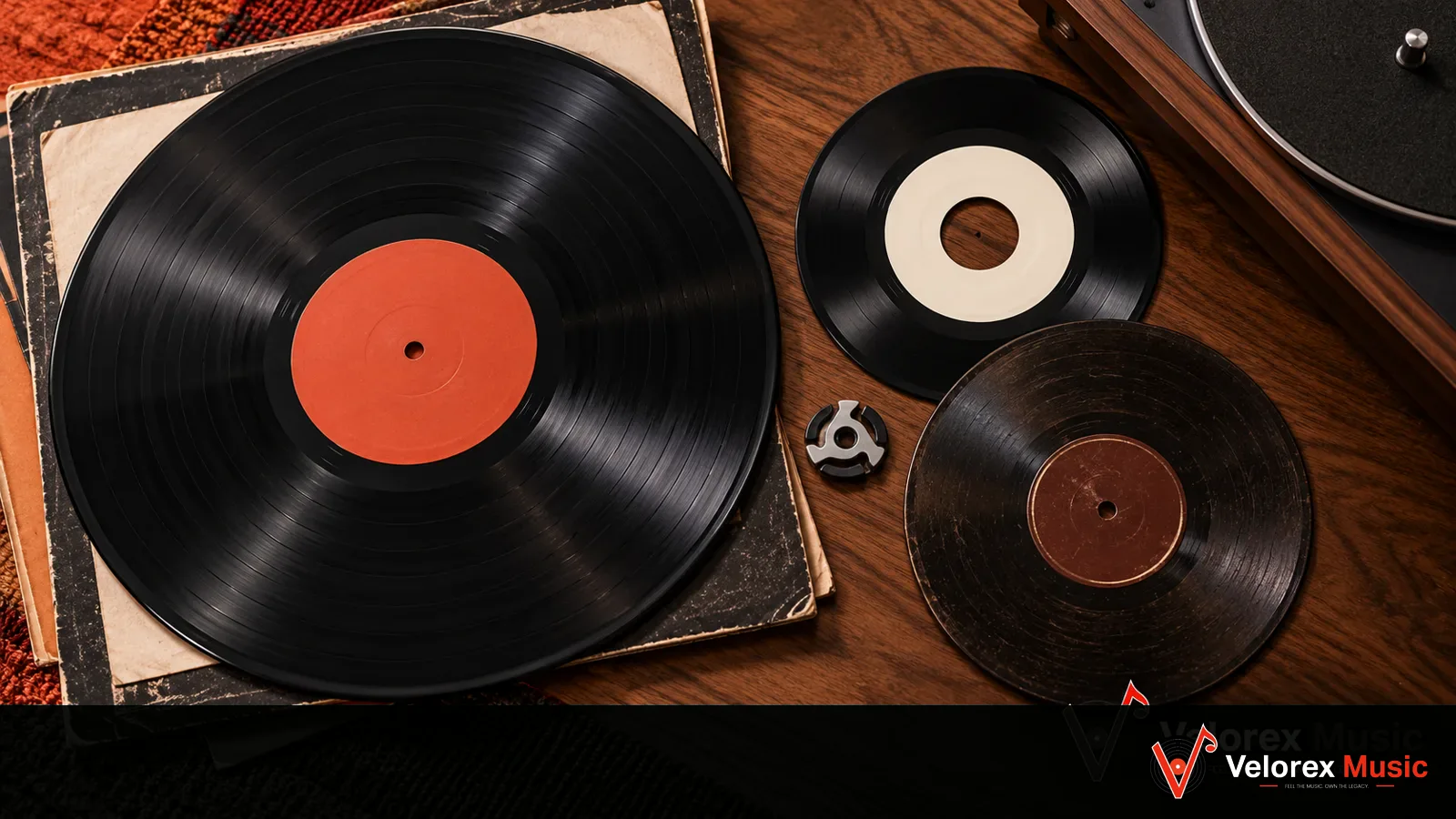
Look at a turntable and you will see a speed switch: 33, 45, sometimes 78. Look at a record listing and you will see 12-inch, 10-inch, 7-inch, LP, EP, single. These numbers describe two different things — how fast the record turns, and how big it is — and getting either one wrong is the most common reason a new collector's first record sounds strange. Here is what each one means and how to tell which is which.
Speed: what RPM means
RPM is revolutions per minute — how many times the platter turns in a minute. A record is cut to be played at one particular speed. Play it faster or slower and both the tempo and the pitch change: too fast and singers sound like cartoon chipmunks, too slow and everything drags and drops in pitch.
33⅓ RPM — the LP
The long-playing record, or LP, was introduced by Columbia Records in 1948 and turns at 33⅓ RPM. The slower speed and much finer "microgroove" let a 12-inch disc hold a whole album — commonly around 20 minutes a side. Almost every soundtrack and album you will buy, new or pre-owned, is a 12-inch LP at 33⅓.
45 RPM — the single, and some LPs
RCA Victor introduced the 7-inch 45 RPM single in 1949. It holds one song a side, which is why "45" became another word for a single. Some 12-inch records are also cut at 45 RPM — the faster speed spreads the music over more groove, which some labels choose for sound quality on special editions. Those records always say so on the label or the sleeve.
78 RPM — shellac records
Before the LP, records were 10-inch or 12-inch discs made of shellac, turning at roughly 78 RPM and holding only a few minutes a side. They are brittle, heavy and break if dropped. Many early Hindi film songs first appeared on 78s. Playing them needs a turntable with a 78 setting and a stylus made for their much wider grooves — a modern LP stylus is the wrong size and can damage them.
Size: 12, 10 and 7 inches
- 12-inch — the standard LP size. Albums, soundtracks and compilations.
- 10-inch — common in the early LP era and in the 78 era; today used for some special releases. The Jersey soundtrack on our shelf is a modern 10-inch.
- 7-inch — singles and EPs, usually at 45 RPM. The large centre hole on many 7-inch singles needs a small adapter to fit a standard spindle.
LP, EP, single, 2LP: the format names
- LP — a full album, usually one 12-inch disc at 33⅓.
- Single — one main song, usually on a 7-inch at 45, with another song on the other side.
- EP — "extended play": more than a single, less than an album, typically four tracks.
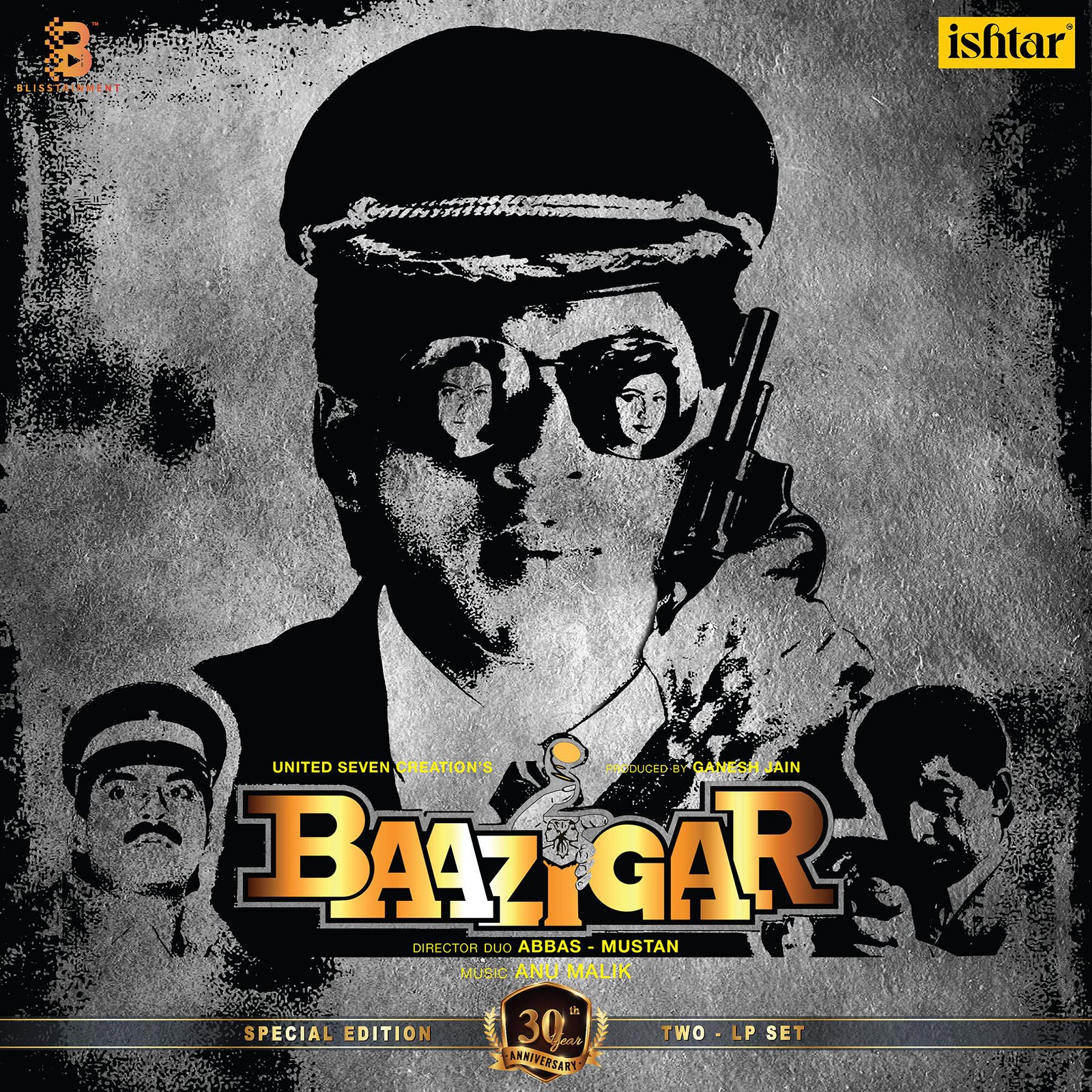
- 2LP / double album — two discs in one package, used when an album is too long for two sides, or to give the music more room. Baazigar and Devdas on our shelf are 2LP sets.
Weight is a separate thing again: a "180g" record is a heavier pressing of the same size and speed. Our guide to vinyl pressings explains 180g, gatefolds and coloured vinyl.
How to tell which speed a record needs
- Read the centre label. Most records print the speed there — "33⅓", "33 RPM" or "45 RPM".
- Check the sleeve or the listing. If the label says nothing, the back cover or the product details usually do.
- Use the size as a guide. A 12-inch album with no marking is almost certainly 33⅓. A 7-inch is usually 45.
- Trust your ears. If a familiar voice sounds wrong — too high or too low — stop and switch speed. Playing at the wrong speed does no harm to the record; it just sounds wrong.
A quick reference
| Record | Usual size | Usual speed |
|---|---|---|
| Album / soundtrack (LP) | 12-inch | 33⅓ RPM |
| Special-edition album | 12-inch | 33⅓ or 45 RPM — check the label |
| Single | 7-inch | 45 RPM |
| EP | 7-inch | 45 RPM (sometimes 33⅓) |
| Shellac record | 10-inch or 12-inch | 78 RPM |
Nearly everything on our vinyl shelf is a 12-inch LP at 33⅓ RPM — which is the speed every turntable plays. If you are still choosing one, read how to choose your first turntable.
Records in this article