












Shellac 78 Records
1900s–1940sBefore the long-playing vinyl album, a record often meant one song on each side of a heavy shellac disc. The 78 gave music a durable commercial form, even though it asked listeners to change records every few minutes.
What a 78 was
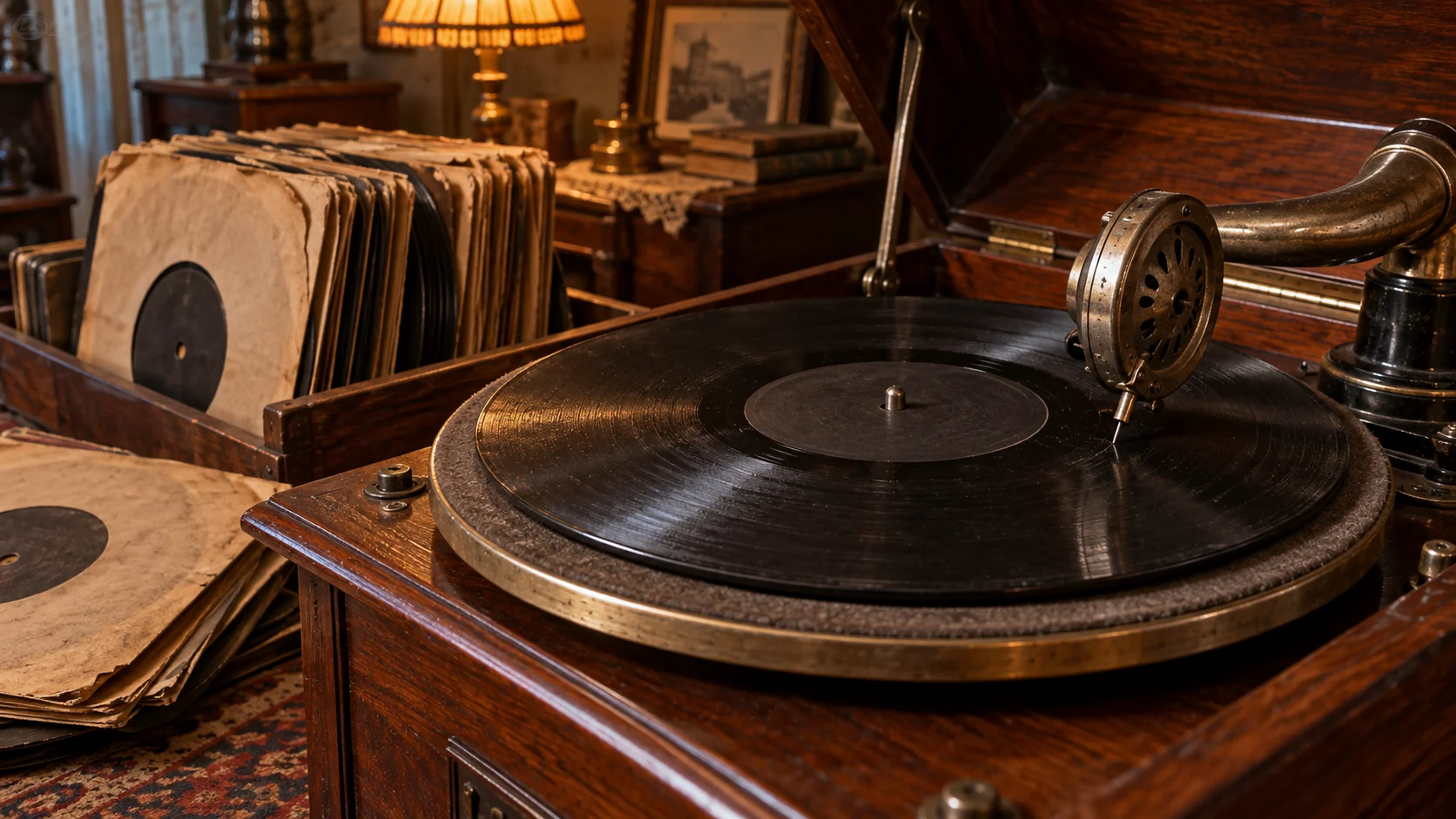
Seventy-eight describes the approximate speed in revolutions per minute. Most mass-produced commercial 78s were pressed in shellac, a material distinct from the vinyl used for the later LP and 45.
A typical ten-inch side allowed roughly three minutes. That limit shaped releases: a longer work had to be divided across several sides, often sold together in a bound collection of sleeves — one origin of the record album.
From performance to pressing
A performance was cut into a master disc. Metal positive and negative copies were made from it, ending in a stamper that pressed the grooved shellac sold in shops. The Library of Congress National Jukebox glossary distinguishes these mothers and stampers because their condition affects the sound of surviving copies.
The disc could be reproduced in quantity, but the material and wide groove meant a very different playback setup from a modern LP. A 78 should be played with equipment and a stylus appropriate to its groove, not treated as a 33⅓ rpm vinyl record.
What survives
The discs preserve voices and performances from before magnetic tape was common. The Library of Congress continues to catalogue, conserve and transfer them; even a worn commercial copy can be the only accessible trace of a recording.
The LP introduced in 1948 did not erase this history. It changed the amount of music a side could hold and the way people could listen to a complete work without interrupting it.
Names that mattered
Listed because of what they did, not as recommendations. Velorex Music did not make any of these.
Did you know?
- The Library of Congress identifies shellac as the material of most commercial 78 rpm discs.
- A ten-inch 78 rpm side typically held about three minutes of music.
- The final metal negative used to press commercial copies is called a stamper.
Remember this?
A three-minute side made every record change part of listening: lifting the arm, turning the disc over, and choosing what followed.
Sources & further reading
- Library of Congress — Sound-recording materials and shellac
- Library of Congress — National Jukebox glossary of disc manufacture
- Library of Congress — Ko Ko preservation essay (ten-inch side length)
- Library of Congress — The first long-playing disc
Written from these sources, not copied from them. External links open in a new tab.