


• 5 Formats Vinyl to Blu-ray
  • 100% Genuine Hand-checked stock
  • Pan-India Tracked delivery
  • Secure Checkout UPI, cards & netbanking

Discover music from the industry's leading labels

  • T-Series
  • Saregama
  • Sony Music
  • Universal Music Group
  • Tips Music
  • Zee Music Co.

🔥 Best Selling

Our most popular picks this month

View All →

✨ New Releases

Fresh arrivals just landed in our store

View All →

Upcoming

Pre-order before they're gone

Our shelf

About Velorex Music

An online record store for India, built around Hindi film music on vinyl — soundtrack LPs from R. D. Burman, Laxmikant–Pyarelal, Nadeem–Shravan, Anu Malik and A. R. Rahman, new pressings and hand-checked pre-owned copies alike.

Every listing shows its label, year and track listing, and orders ship across India with tracking.

New to collecting? Read the Velorex Journal The Evolution of Music & Audio How shipping works

Feel the music More than music Care · Preserve · Play

All Products

Wear the music. Live the vibe.

Keep the music alive. Care for what you love.

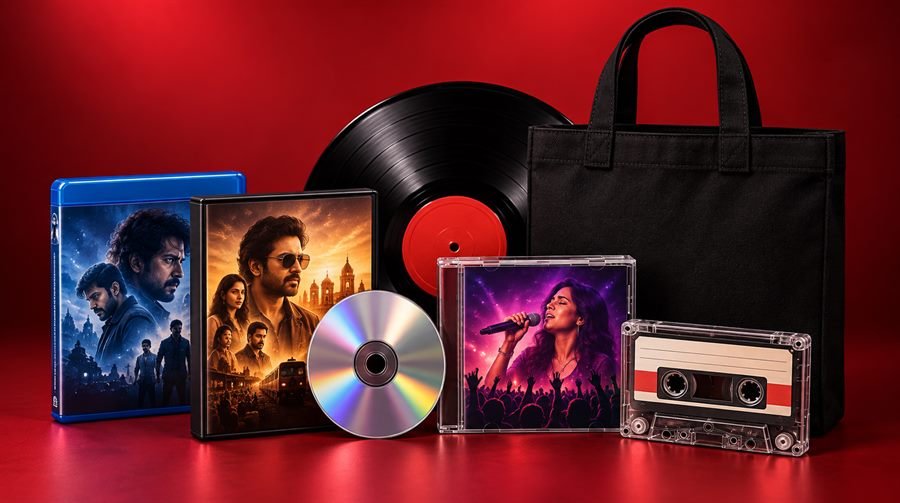
Rediscover timeless melodies. Explore our curated collection of records, CDs, cassettes and films from legendary artists and iconic films.

    • Pan-IndiaShipping
    • Original& Official
    • Music InspiredLifestyle
    • Cleaner SoundRemove dust & dirt
    • Longer LifeProtect your collection
    • Better ExperienceMusic as it should be

    Showing all products

    Product Details

    Composer

    Page not found

    The page you were looking for has moved or no longer exists.

    Better together

    Combo Offers

    Bundles we put together because they belong together — a record and the kit to keep it clean, or two timeless favourites from the same era.

    • Great ValueOne click, whole set
    • Curated SetsHandpicked combinations
    • Authentic & GenuineQuality you can trust
    Great music lives on

    Pre-owned

    Second-hand vinyl, CDs, cassettes, Blu-rays and DVDs — every copy checked and graded before it ships.

    • Quality CheckedEvery item inspected
    • Safe PackagingShips with care
    • Sustainable ChoiceMore music, less waste

    The story of music technology

    A Journey Through Music & Machines

    From the earliest recording devices to today's streaming world, discover how the machines and formats we use to experience music have evolved.

    1877 – todayThe span
    Cylinder to streamThe journey
    Sourced & citedEvery claim
    Before the playlist

    Remember When Music Felt Different?

    Before streaming, listening was an activity rather than a background condition. It had steps, and the steps were part of it.

    • You chose a record.
    • You cleaned it.
    • You placed the needle.
    • You adjusted the amplifier.
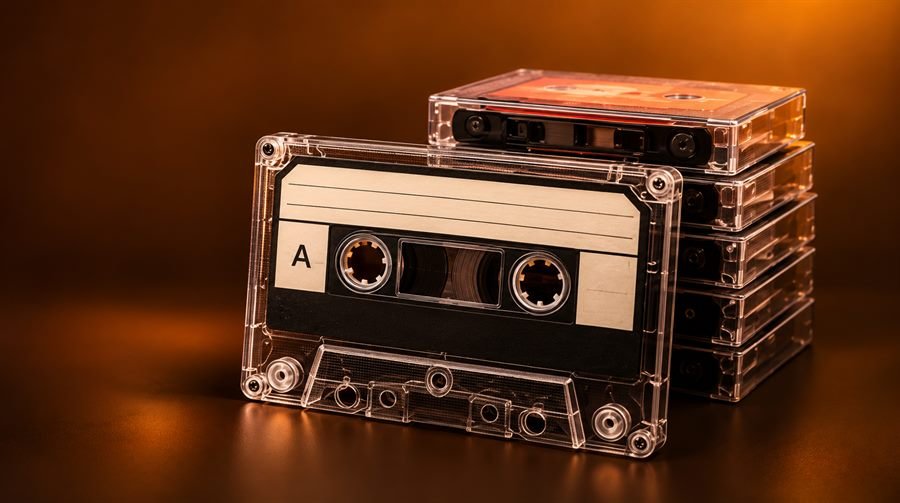
    • You pressed play on a cassette.
    • You waited for the radio.
    • You built a CD collection, one at a time.

    These machines didn't just play music. They sat in particular rooms, in particular years, and they ended up carrying the memory of whatever was happening while they played.

    Music Changes. The Memories Stay.

    Every format on this page was once the newest thing there was, and every one of them was replaced. What has not changed in a hundred and fifty years is the part underneath: the wish to hear something again, to keep it, and to play it for somebody else.

    Explore Music at Velorex
    The album, invented

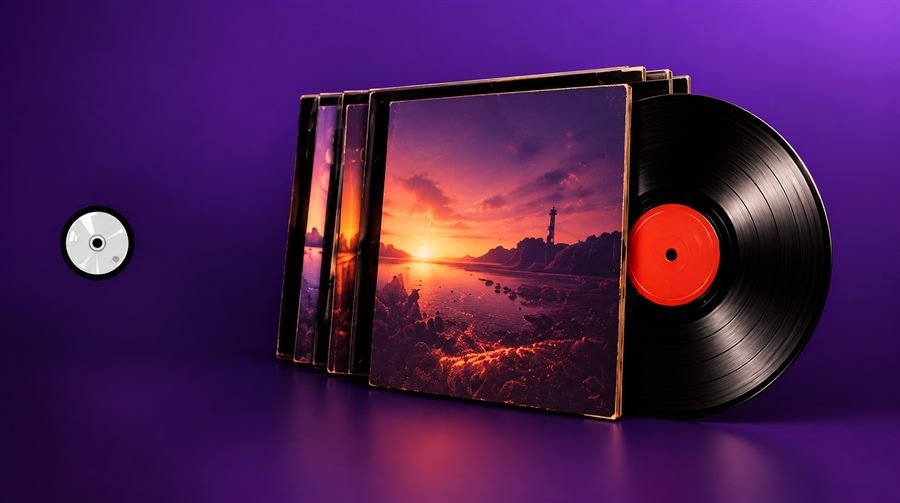
    Vinyl Records

    1948 onwards

    A 78 gave you around four minutes a side, so a long work arrived as a stack of discs in a bound sleeve — literally an album, like a photograph album. When Columbia fitted twenty-three minutes onto one side, the word stayed and the meaning changed.

    Origin

    Columbia introduced the long-playing microgroove record in June 1948: 33⅓ revolutions per minute, a much finer groove than the 78, and vinyl instead of brittle shellac. It held roughly twenty-three minutes a side.

    RCA Victor answered in 1949 with a different idea — the 7-inch 45 rpm disc with the large centre hole, designed around one song and a fast-changing stack.

    The two formats settled into a division of labour that lasted fifty years: the LP for the body of work, the 45 for the hit.

    How it works

    The groove is not a channel the needle follows for guidance. The groove is the waveform: its side-to-side wiggle is a physical tracing of the sound pressure that was in the room.

    A stylus sits in that groove and is shaken by its walls. In a magnetic cartridge that movement wiggles a tiny magnet near a coil, generating a very small electrical signal shaped like the original sound. Everything downstream is amplification.

    Stereo, adopted for the LP in 1958, works by giving each wall of the V-shaped groove its own channel. One groove, two signals, read by the same stylus moving in two directions at once.

    Why records need a phono stage

    Bass has big, wide wiggles and treble has small ones. Cut a record straight and the bass grooves would be so wide they would run into each other, while the treble would disappear into the noise.

    So records are cut with the bass reduced and the treble boosted, to a standard curve, and the player applies the exact opposite on the way back. That is what a phono input does that a line input does not — and why a turntable plugged into an ordinary input sounds thin and quiet.

    What replaced it, and what happened next

    The cassette took portability and the compact disc took convenience, and by the early 1990s vinyl was widely treated as finished. It never entirely stopped: club DJs kept pressing plants busy through the whole period, because nothing else let you manipulate playback by hand.

    The revival since has been driven by the things digital cannot offer — artwork at a size you can read, a running order somebody intended, a shelf that shows what you have listened to for twenty years.

    Why people still love it

    A record asks for attention. You choose it, clean it, cue it, and turn it over halfway through. That friction is the point: it makes listening a decision rather than a background condition.

    It is also the only common format where you can see the music. The loud passages are visibly wider in the groove.

    Names that mattered

    Listed because of what they did, not as recommendations. Velorex Music did not make any of these.

    ColumbiaIntroduced the 33⅓ microgroove LP in June 1948; Peter Goldmark led the engineering team.
    RCA VictorIntroduced the 7-inch 45 rpm record and its fast-changing player in 1949.
    DeccaAmong the companies adapting the LP for stereo playback from 1958.

    Did you know?

    • The microgroove was perfected by Columbia and CBS engineers over the summer of 1947, a year before launch.
    • "Album" predates the LP — it originally meant the bound book of sleeves that held a set of 78s.
    • A 12-inch LP side has a groove roughly 400 metres long if you could straighten it out.
    • The 45's wide centre hole exists so a spindle mechanism could drop and change records quickly.

    Remember this?

    The sequence is the same in every memory of it: the sleeve, the inner sleeve, the weight of the disc on your palm, the moment of silence after the needle lands and before the first note. Then, twenty minutes later, getting up to turn it over.

    Sources & further reading

    Written from these sources, not copied from them. External links open in a new tab.

    From the record room

    Velorex Journal

    Notes on vinyl, Hindi film music and the records worth collecting.

    Article

    🛒 Shopping Cart

    👤 My Profile

    Order History

    🔐 Welcome Back

    Sign in to your Velorex Music account

    Don't have an account? Create one

    ✨ Create Account

    Join Velorex Music and start collecting

    Already have an account? Sign in

    🔑 Forgot Password?

    📧

    Contact our support team

    We're working on automated password reset. For now, please email us with the email address on your account and we'll help you reset your password within 24 hours.

    ✉️ Email Support

    Secure Checkout

    Velorex Music Payment Gateway

    ₹0.00

    Shipping Address

    Loading addresses…

    Clicking Pay Now opens our secure payment partner Razorpay, where you can pay via card, UPI, net banking or wallet.

    Card details are entered on Razorpay's payment page — Velorex never sees them.

    Processing Payment...

    Please do not refresh the page