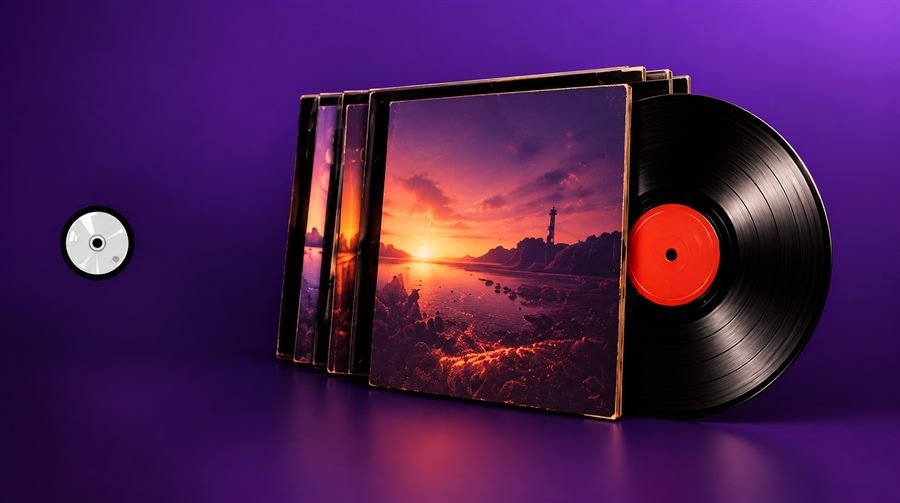
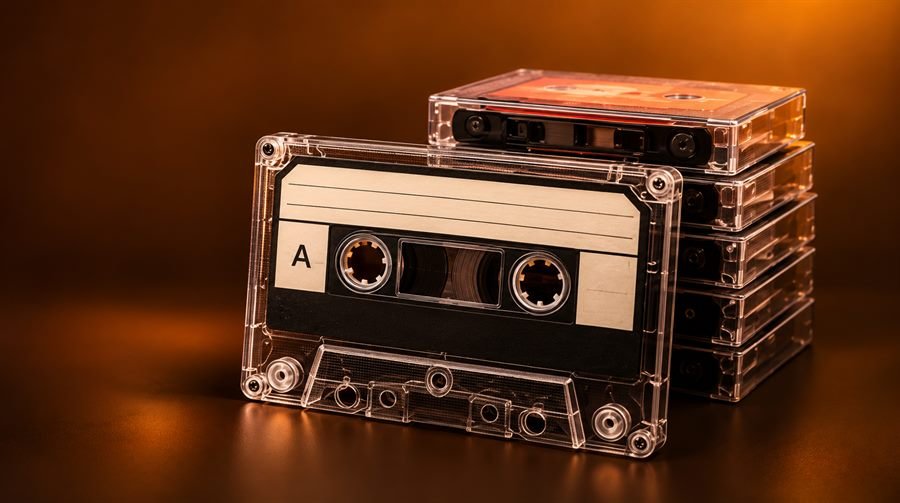
• 5 Formats Vinyl to Blu-ray
  • 100% Genuine Hand-checked stock
  • Pan-India Tracked delivery
  • Secure Checkout UPI, cards & netbanking

Discover music from the industry's leading labels

  • T-Series
  • Saregama
  • Sony Music
  • Universal Music Group
  • Tips Music
  • Zee Music Co.

🔥 Best Selling

Our most popular picks this month

View All →

✨ New Releases

Fresh arrivals just landed in our store

View All →

Upcoming

Pre-order before they're gone

Our shelf

About Velorex Music

An online record store for India, built around Hindi film music on vinyl — soundtrack LPs from R. D. Burman, Laxmikant–Pyarelal, Nadeem–Shravan, Anu Malik and A. R. Rahman, new pressings and hand-checked pre-owned copies alike.

Every listing shows its label, year and track listing, and orders ship across India with tracking.

New to collecting? Read the Velorex Journal The Evolution of Music & Audio How shipping works

Feel the music More than music Care · Preserve · Play

All Products

Wear the music. Live the vibe.

Keep the music alive. Care for what you love.

Rediscover timeless melodies. Explore our curated collection of records, CDs, cassettes and films from legendary artists and iconic films.

    • Pan-IndiaShipping
    • Original& Official
    • Music InspiredLifestyle
    • Cleaner SoundRemove dust & dirt
    • Longer LifeProtect your collection
    • Better ExperienceMusic as it should be

    Showing all products

    Product Details

    Composer

    Page not found

    The page you were looking for has moved or no longer exists.

    Better together

    Combo Offers

    Bundles we put together because they belong together — a record and the kit to keep it clean, or two timeless favourites from the same era.

    • Great ValueOne click, whole set
    • Curated SetsHandpicked combinations
    • Authentic & GenuineQuality you can trust
    Great music lives on

    Pre-owned

    Second-hand vinyl, CDs, cassettes, Blu-rays and DVDs — every copy checked and graded before it ships.

    • Quality CheckedEvery item inspected
    • Safe PackagingShips with care
    • Sustainable ChoiceMore music, less waste

    The story of music technology

    A Journey Through Music & Machines

    From the earliest recording devices to today's streaming world, discover how the machines and formats we use to experience music have evolved.

    1877 – todayThe span
    Cylinder to streamThe journey
    Sourced & citedEvery claim
    Before the playlist

    Remember When Music Felt Different?

    Before streaming, listening was an activity rather than a background condition. It had steps, and the steps were part of it.

    • You chose a record.
    • You cleaned it.
    • You placed the needle.
    • You adjusted the amplifier.
    • You pressed play on a cassette.
    • You waited for the radio.
    • You built a CD collection, one at a time.

    These machines didn't just play music. They sat in particular rooms, in particular years, and they ended up carrying the memory of whatever was happening while they played.

    Music Changes. The Memories Stay.

    Every format on this page was once the newest thing there was, and every one of them was replaced. What has not changed in a hundred and fifty years is the part underneath: the wish to hear something again, to keep it, and to play it for somebody else.

    Explore Music at Velorex
    The industry loses control of distribution

    File Sharing & Downloads

    1998–2005

    Compression made a song small enough to move. What happened next was not a technical story so much as a legal and commercial one: for about six years, the question of who controlled distribution was genuinely open, and it was settled in court.

    The first fight was about a device

    Before the file-sharing cases came a case about hardware. In 1998 the recording industry sought to stop the sale of the Diamond Rio, an early portable MP3 player, arguing it was a digital audio recording device subject to the Audio Home Recording Act of 1992.

    The Ninth Circuit disagreed in 1999. Its reasoning is worth quoting in substance: the Rio merely made copies in order to render portable — to "space-shift" — files that already resided on the user's hard drive, which the court called a paradigmatic noncommercial personal use.

    That sentence is why MP3 players were legal to sell, and it is the legal ground the entire portable-player industry was then built on.

    Napster

    Napster arrived in 1999 and made peer-to-peer sharing something an ordinary person could do. The design was not fully decentralised: a central index held what was available, users searched that index by song or artist, and the file itself came directly from another user's computer.

    At its peak in 2001, as many as 1.5 million people were sharing files simultaneously. More consequentially, it established the idea of downloading a song from the internet as a normal thing to do.

    The lawsuits began in December 1999 and January 2000. After concluding it was not technically feasible to comply with the court's order and keep the network running, Napster ceased operations on 1 July 2001.

    What replaced it

    Shutting one service down did not put the idea back. What changed behaviour was a legal alternative that was genuinely easier than the illegal one: a catalogue you could search, a single track for a fixed price, and a download that took seconds.

    The album was the casualty. For fifty years the unit of purchase had been a record, partly because a record was physically a set of songs. Once a single track could be bought on its own, a great many albums turned out to have been sold on the strength of two songs.

    Why it still matters

    Every argument about streaming today — what an artist is paid, who decides what is available, whether you own anything — was first had in this period, with lower stakes and louder rhetoric.

    The lasting change is that distribution stopped being a physical business. Once that was true, the shift to access rather than ownership was a matter of time.

    Names that mattered

    Listed because of what they did, not as recommendations. Velorex Music did not make any of these.

    NapsterMade peer-to-peer sharing mainstream from 1999; ceased operating on 1 July 2001 under court order.
    Diamond MultimediaMaker of the Rio, whose defence in 1999 established that space-shifting your own files was lawful personal use.
    Fraunhofer IISIts Layer 3 coding is what made the files small enough for any of this to happen.

    Did you know?

    • The Ninth Circuit's 1999 Rio ruling used the term "space-shift" — moving your own music to a portable device.
    • Napster used a central index server, so it was not the fully decentralised system it is often remembered as.
    • Napster ceased operations on 1 July 2001 after finding it could not comply with the injunction and keep running.
    • Around 1.5 million people were sharing simultaneously at the service's 2001 peak.

    Remember this?

    Leaving a download running overnight on a dial-up line, and finding in the morning that the last thirty seconds were missing, or that the track was someone else's song entirely with the right filename.

    Sources & further reading

    Written from these sources, not copied from them. External links open in a new tab.

    From the record room

    Velorex Journal

    Notes on vinyl, Hindi film music and the records worth collecting.

    Article

    🛒 Shopping Cart

    👤 My Profile

    Order History

    🔐 Welcome Back

    Sign in to your Velorex Music account

    Don't have an account? Create one

    ✨ Create Account

    Join Velorex Music and start collecting

    Already have an account? Sign in

    🔑 Forgot Password?

    📧

    Contact our support team

    We're working on automated password reset. For now, please email us with the email address on your account and we'll help you reset your password within 24 hours.

    ✉️ Email Support

    Secure Checkout

    Velorex Music Payment Gateway

    ₹0.00

    Shipping Address

    Loading addresses…

    Clicking Pay Now opens our secure payment partner Razorpay, where you can pay via card, UPI, net banking or wallet.

    Card details are entered on Razorpay's payment page — Velorex never sees them.

    Processing Payment...

    Please do not refresh the page