



Surround Sound
1992 onwardsStereo asks two speakers to suggest a whole scene in front of you. Surround stops suggesting: it puts real speakers behind the listener and sends them their own signal. The idea was a cinema technology first, and it arrived at home almost by accident, carried there by a video format.
Origin
Digital surround reached cinemas in the early 1990s. Dolby's own account puts the first feature presented in Dolby Digital at Batman Returns in 1992; DTS followed as a competing digital format, and for most of the decade a projection booth might be equipped for either.
Both did the same fundamental job: carry discrete channels rather than channels derived from a matrix, so a sound placed at the rear left was genuinely only at the rear left.
What 5.1 actually means
Dolby Digital delivers up to 5.1 discrete channels. The five are left, centre and right across the front, plus left and right surround behind the listener.
The centre channel is the one that matters most and gets the least attention: it carries dialogue, anchored to the screen, so speech stays put no matter where in the room you sit. In a two-speaker system the centre is an illusion that only works in one seat.
The .1 is the low-frequency effects channel. It is called a tenth because it is band-limited — it carries only the bottom of the spectrum, so it needs a fraction of the bandwidth of a full channel. It is not "the subwoofer channel" exactly; bass management in the receiver decides what actually goes to the sub.
How it got into the house
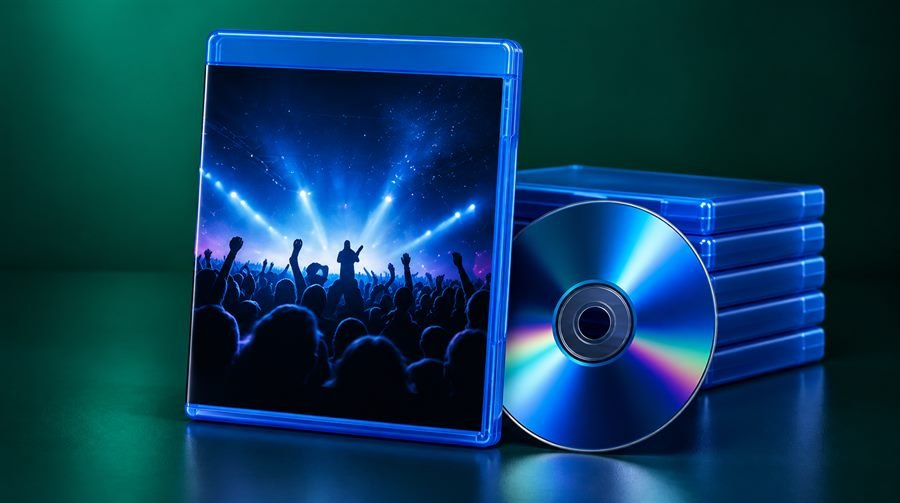
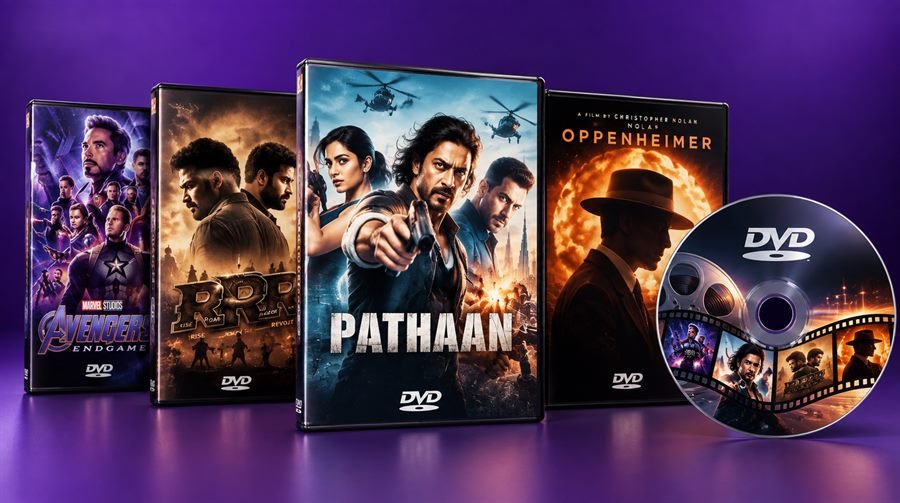
DVD is the reason. The format carried multichannel soundtracks as standard, so a living room that bought a DVD player had surround content whether or not it had planned to, and the receiver market followed within a couple of years.
That is also why home surround grew up as a film technology rather than a music one. Music mixed for five speakers existed — SACD and DVD-Audio both carried it — but the discs that sold were films.
Then and now
The channel count kept climbing, and then the model changed. Object-based systems stopped assigning a sound to a speaker and started describing where it should be, letting the receiver work out which speakers to use — which is what makes a soundbar or a pair of headphones able to attempt the same effect.
For music, the interesting consequence arrived much later, when streaming services began carrying immersive mixes to ordinary headphones.
Names that mattered
Listed because of what they did, not as recommendations. Velorex Music did not make any of these.
Did you know?
- Dolby dates the first feature presented in Dolby Digital to Batman Returns in 1992.
- The ".1" is a band-limited effects channel, which is why it counts as a fraction rather than a whole one.
- The centre channel exists mainly so dialogue stays anchored for listeners who are not sitting in the middle.
- Home surround spread through DVD players rather than through music releases.
Remember this?
Running speaker cable under the carpet to the back of the room, and then making everyone sit through the helicopter scene to prove it had been worth it.
Sources & further reading
- Dolby — Batman Returns and the first Dolby Digital feature
- Dolby Professional — Dolby Digital 5.1
- Library of Congress — Digital Theater Systems audio formats
Written from these sources, not copied from them. External links open in a new tab.